The 1970 Foundation: The Need for a Capital Club
Unlike European capitals such as London, Madrid, or Rome, Paris endured decades of fragmented football representation during the mid-20th century. Historic clubs like Racing Club de France and Red Star struggled to sustain sustained professional dominance within the top division. In response, a consortium of Parisian businessmen and sporting organizers initiated a public campaign to establish a premier club capable of representing the capital city on the international stage.
On August 12, 1970, Paris FC (founded in 1969 to generate public backing) merged with Stade Saint-Germain, a club founded in 1904 based in the western suburb of Saint-Germain-en-Laye. The merger created Paris Saint-Germain Football Club. The new squad combined Stade Saint-Germain’s sporting infrastructure and competitive place in the national division with Parisian financial backing.
The Hechter Shirt & The Borelli Era
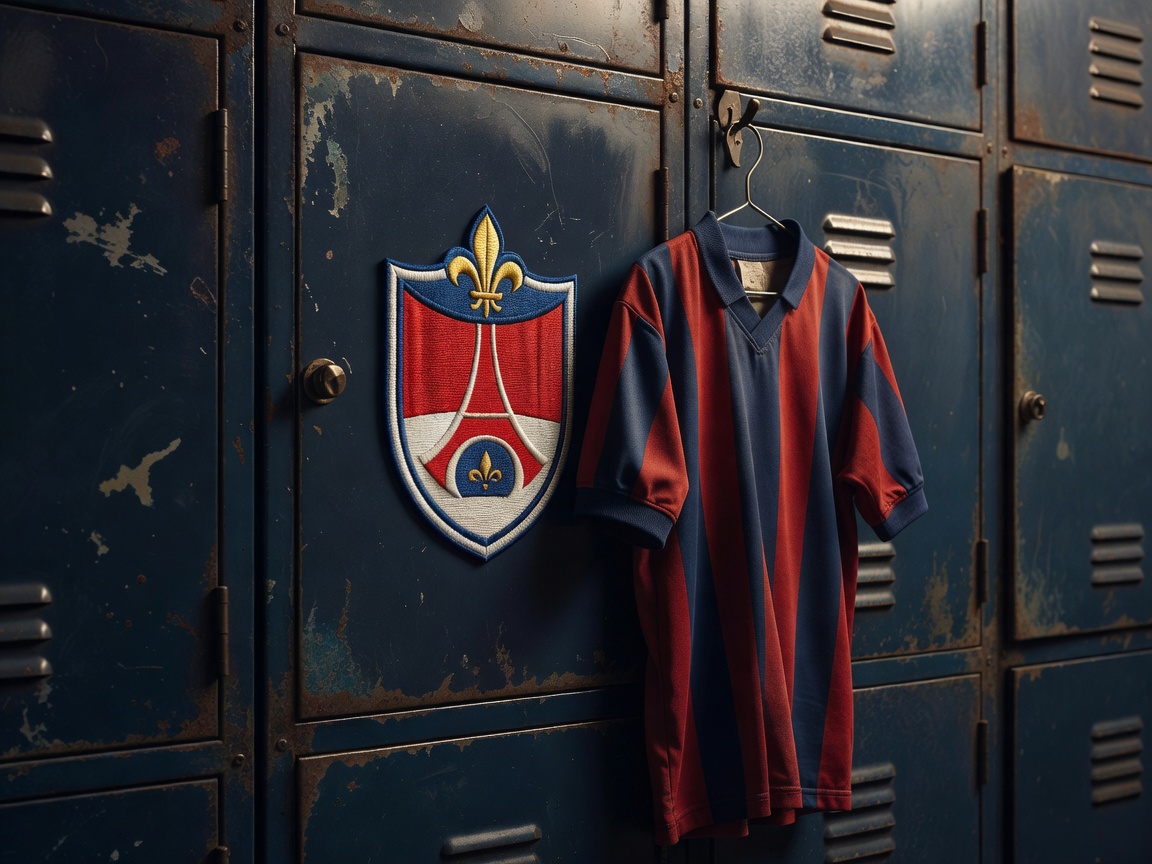
In 1973, French fashion designer Daniel Hechter became the club's president. Hechter personally drafted the club’s legendary shirt design: a deep royal blue torso bisected by a bold vertical red band bordered by white stripes. The colors paid homage to both the capital city of Paris (blue and red) and the French royalty historically associated with Saint-Germain-en-Laye (white, referencing King Louis XIV, born in Saint-Germain).
Following Hechter's departure, Francis Borelli assumed the presidency in 1978 and steered the club through its initial era of major silver achievements. Under Borelli’s leadership, PSG captured its first major honors: consecutive Coupe de France titles in 1982 and 1983, followed by the club’s maiden French Division 1 championship in the 1985–1986 campaign under manager Gérard Houllier.
| Era | Time Period | Key Figures | Defining Characteristics |
|---|---|---|---|
| Foundation & Early Years | 1970–1978 | Daniel Hechter, Jean-Luc Lagardère, Just Fontaine | Grassroots fundraising, merger resolution, birth of the Hechter kit, promotion to Division 1. |
| Borelli Golden Period | 1978–1991 | Francis Borelli, Gérard Houllier, Safet Sušić | First Coupe de France trophies (1982, 1983) and first Division 1 title (1986). |
| Canal+ European Era | 1991–2006 | Michel Denisot, George Weah, Raí, Ronaldinho | 1996 European Cup Winners' Cup triumph, Classique rivalries, major continental runs. |
| Modern Era | 2011–Present | Zlatan Ibrahimović, Edinson Cavani, Kylian Mbappé | Domestic dominance, modernization of facilities, campus training center in Poissy. |
The Canal+ Era: European Glory (1991–2006)
In May 1991, French television broadcaster Canal+ acquired Paris Saint-Germain, injecting unprecedented commercial sponsorship and tactical professionalism. Managed by figures such as Artur Jorge and Luis Fernandez, PSG developed into a feared continental opponent characterized by athletic defensive rigor and attacking flair.
This period yielded five consecutive European semi-finals between 1993 and 1997. The pinnacle arrived on May 8, 1996, in Brussels, when Bruno Ngotty’s 28th-minute free kick earned PSG a 1–0 victory over Rapid Wien to capture the UEFA Cup Winners' Cup. It remains the club's defining European trophy.
Modern Era & Future Campus Poissy
In 2011, Qatar Sports Investments (QSI) acquired the club, establishing Paris Saint-Germain as a perennial title contender in European football. Beyond domestic league championships, the club invested heavily in infrastructure, culminating in the opening of the PSG Campus in Poissy in 2023—a sprawling state-of-the-art multi-sport training center dedicated to developing local youth prospects from the Greater Paris area.
Today, PSG operates not only as a sporting giant but as a cultural bridge between football, streetwear, haute couture, and music, frequently collaborating with global design icons while preserving its Parc des Princes heritage.